What does it take to transform a high-traffic public arena into a venue that not only delights sports fans and skaters, but also meets NHL-grade humidity and temperature standards—all without interrupting operations? At Design Mechanical, Inc. (DMI), the answer lies in precision planning, bold engineering, and relentless project management. This is exactly what unfolded during a multi-phase mechanical renovation at Cable Dahmer Arena in Independence, Missouri, where DMI successfully completed a complex, fast-track Commercial HVAC Contractor project under tight constraints and high expectations. Here’s how they did it—and why it matters to facility managers and engineers navigating similar climate control and refrigerant transitions across the Midwest.
Solving the Ice Fog Dilemma: A Facility in Need of HVAC Innovation
The Cable Dahmer Arena is a multi-use facility known for concerts, community events, and especially its NHL-size ice rink. But when high outdoor temperatures clashed with interior cooling, thick fog blanketed the ice—disrupting visibility, safety, and events for the Community Ice Rink. It wasn’t just uncomfortable—it was a risk to revenue and reputation. Facility managers knew they needed an expert Commercial HVAC Contractor to take control of the environment.
Phase I: Replacing RTUs and Tackling Humidity Head-On
The initial focus was clear: remove the fog. The city enlisted DMI to execute the replacement of an aging 65-ton rooftop unit (RTU) and to install a desiccant dehumidifier. This phase addressed indoor humidity control by adding advanced moisture removal capability directly into the rink’s airflow system.
-
High-humidity indoor air was the main culprit behind recurring fog on the rink.
-
Desiccant-based dehumidification systems remove water vapor efficiently without compromising cooling performance.
-
The integration of a modern RTU boosted airflow and cooling reliability for extreme summer conditions.
Keeping Cool Behind the Scenes: Office and Locker Room Upgrades
After solving the visibility and safety problem on the ice, the project shifted focus to comfort and functionality for athletes and staff. In Phase II, DMI executed the like-for-like replacement of four rooftop units serving office areas and locker rooms, upgrading older systems with modern HVAC technology that delivers reliable performance, lower maintenance costs, and better energy efficiency.
Phase II: Enhancing Occupant Comfort Without Redesign
While these replacements were structurally simpler, the performance gains were significant. DMI’s fast turnaround minimized downtime, aligning with the city’s needs for continuous operation and efficient project management.
-
Updated RTUs with advanced compressors and fan controls improve temperature accuracy.
-
Modern systems reduce utility bills through better Energy Efficiency Ratios (EER).
-
Employee-owned culture of DMI ensured attention to detail and project pride at every stage.
The Biggest Challenge: Retrofitting the Main Arena Bowl
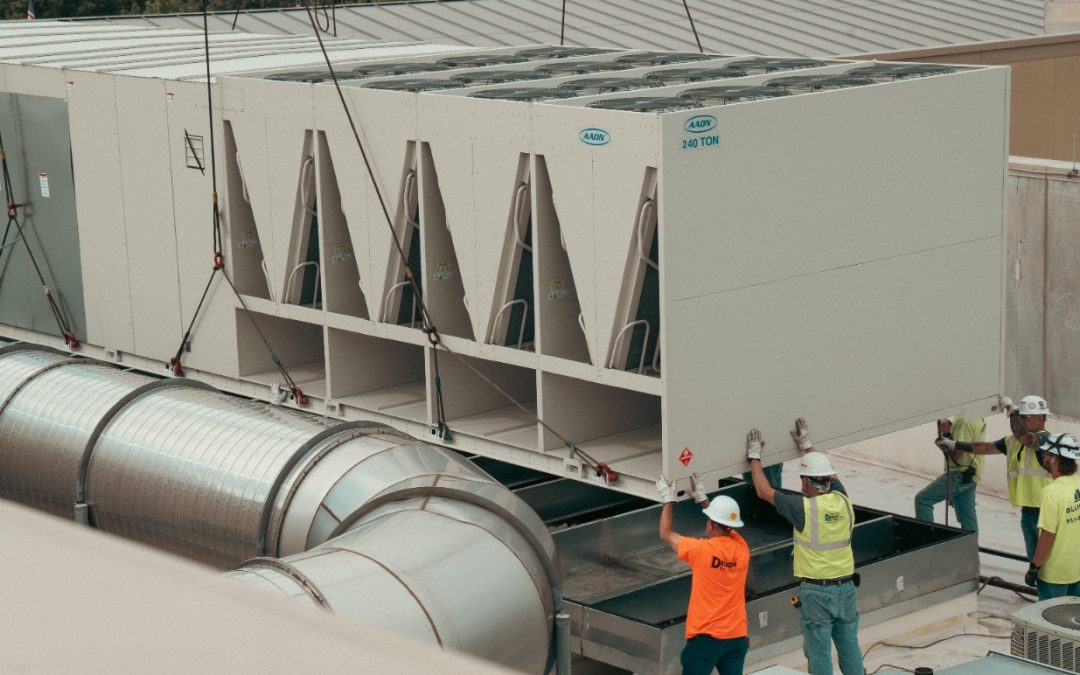
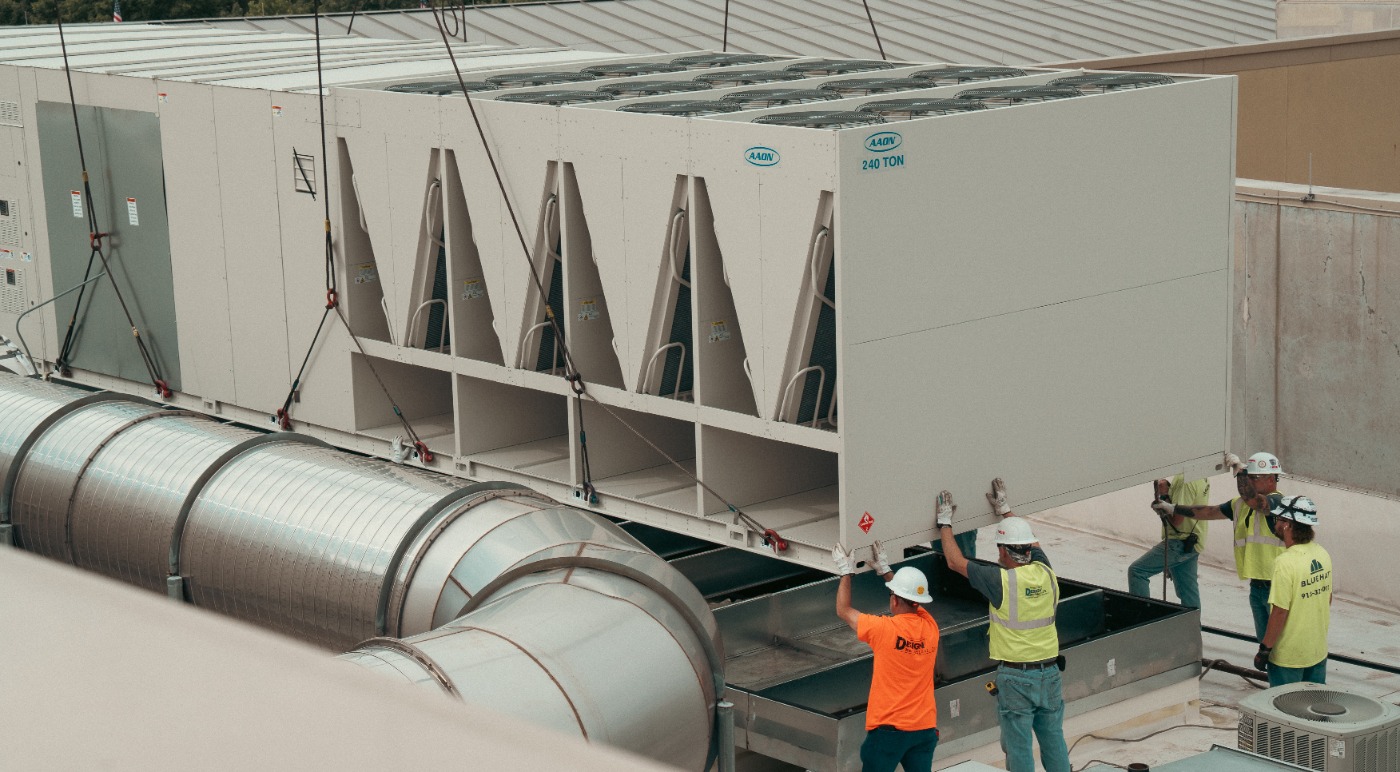
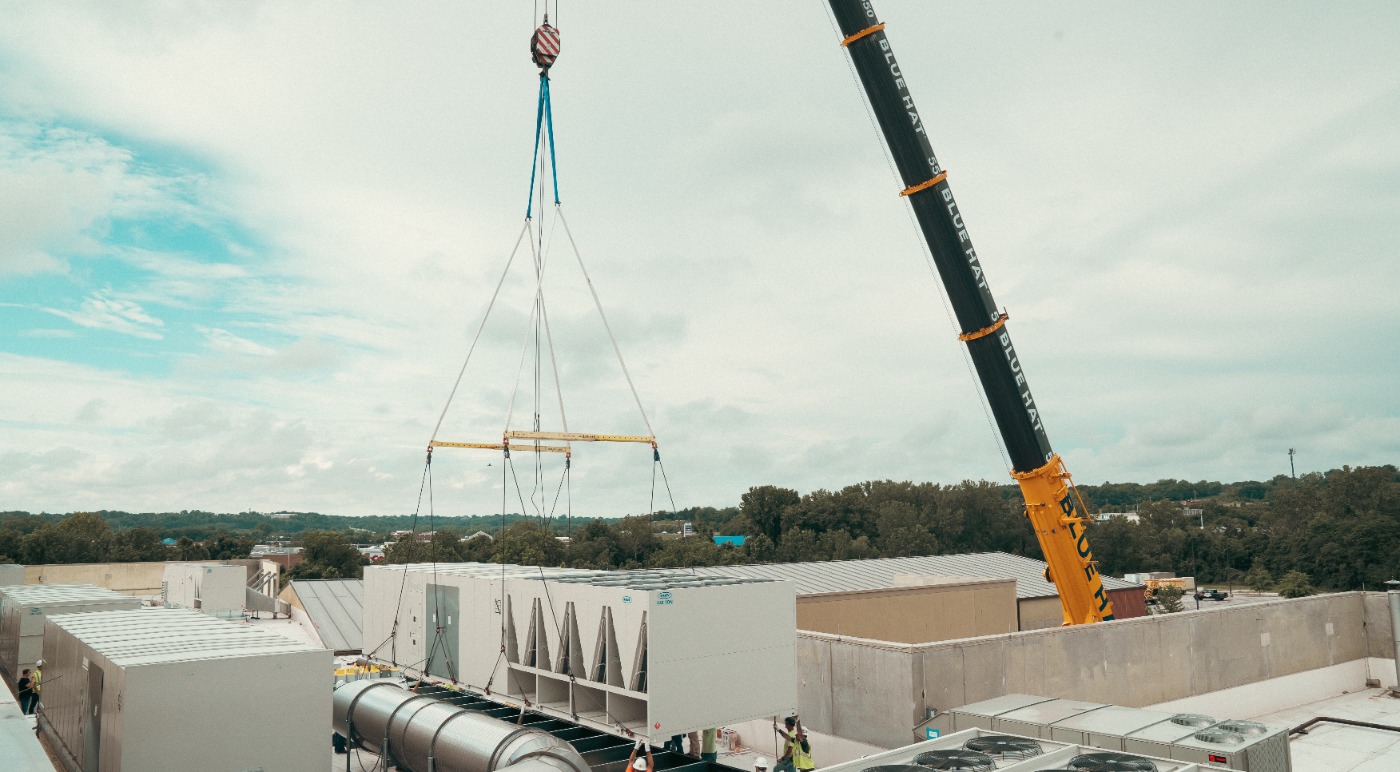
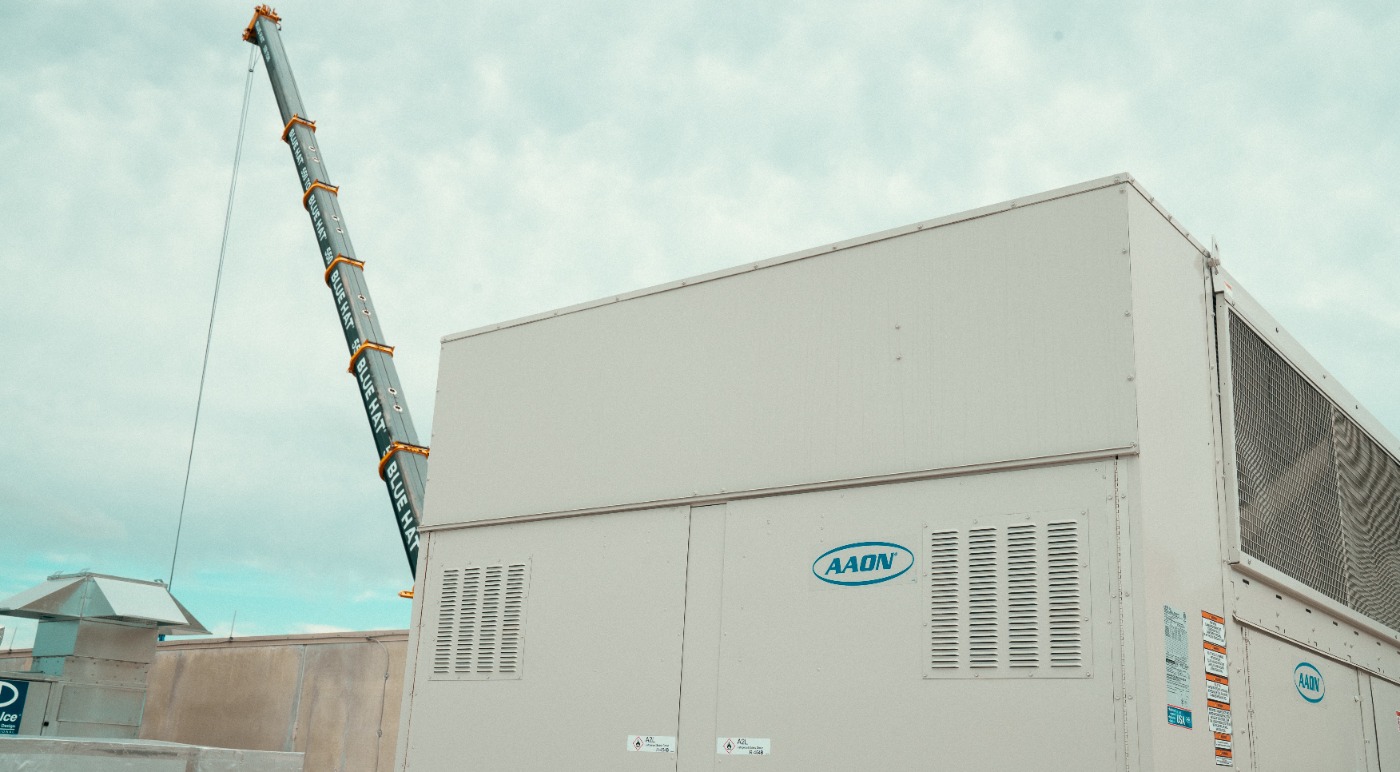
Phase III was the crown jewel—and the greatest test. The city chose a Design-Build model with DMI at the helm due to their track record for efficiency and speed. The goal: retrofit the four massive 230-ton RTUs that service the arena’s main bowl and align the system with NHL requirements for temperature and humidity—within a strict four-week window.
Adapting to the Realities of New Refrigerants
This stage demanded technical mastery. The switch from outdated R-410a systems to new RTUs using eco-friendlier R-454b refrigerant presented serious design implications. R-454b has a lower global warming potential, but it also requires larger, heavier equipment—creating structural challenges that DMI addressed through design-assist collaboration with Henderson Engineers and a structural engineering subcontractor.
-
Two RTUs were split into separate air handling and condensing sections due to size constraints.
-
Nearly 400 pounds of R-454b refrigerant was sourced quickly to complete the system charge.
-
Project managers navigated shipment delays and transport issues with contingency planning and teamwork.
What This Project Means for Facility and Property Managers
This isn’t just a case study in mechanical engineering—it’s a roadmap for any facility manager facing HVAC aging, refrigerant transitions, or performance upgrades under pressure. Here are the takeaways from DMI’s work at Cable Dahmer Arena that apply directly to your operation:
1. Design-Build Isn’t a Buzzword—It’s a Lifesaver
By owning the full project scope, DMI accelerated decision-making, reduced delays, and minimized disruption to arena events. Design-Build projects move faster because all stakeholders are on the same team from the outset.
2. Refrigerant Phase-Outs Require More Than Just Swap-Outs
With R-410a on its way out, retrofits aren’t plug-and-play. They affect weight loads, duct connections, and equipment access. DMI’s structural integration expertise ensured compliance and safety while meeting sustainability goals.
3. Employee-Owned Culture Yields On-Site Excellence
It wasn’t just engineers solving problems. DMI foremen, technicians, and project managers worked through weather issues, shipping problems, and labor timing—because every one of them has skin in the game.
-
24/7 HVAC Service & Maintenance keeps uptime high for arenas and offices alike.
-
Energy Management Solutions help justify HVAC upgrades through long-term savings.
-
HVAC Load Calculations and design consulting ensure tailored performance—not over- or under-designed systems.
Conclusion
Whether you’re managing a public arena, an office tower, or a critical facility like a hospital or data center, the Cable Dahmer Arena project proves that precision HVAC engineering, skilled mechanical craftsmanship, and deep stakeholder trust can transform even the most challenging upgrade into a long-term victory. Design Mechanical, Inc. doesn’t just install units—they build climate control strategies that support your operational goals. As R-410a fades and performance standards rise, now is the time to act. If you’re ready to discuss how DMI can modernize your building systems through Commercial HVAC Services, Building Automation Systems, or Sustainable Refrigeration upgrades, reach out today. The right partner makes all the difference.